
How Citidaron Works
Cytisinicline mechanism of action
Citidaron (cytisinicline), previously used name: cytisine, is a partial agonist of the α4β2 nicotinic acetylcholine receptor.1
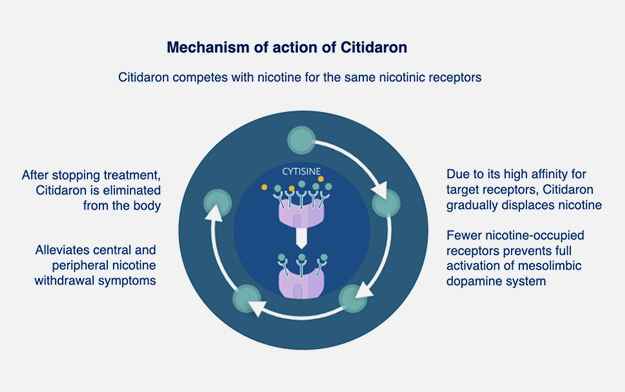
Cytisinicline competes with nicotine for the same receptors and gradually displaces nicotine due to its stronger binding. It has lower ability to stimulate nicotinic receptors.1
How Nicotine Drives Addiction
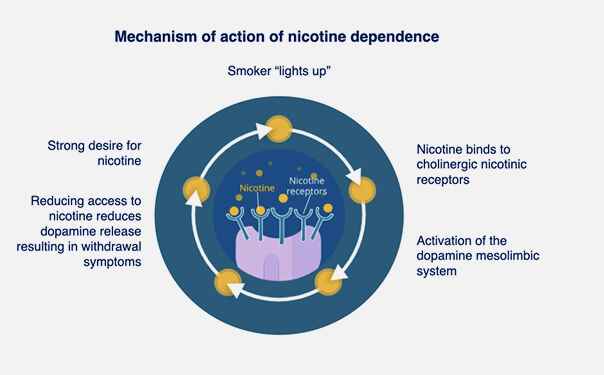
Nicotine binds to nicotinic acetylcholine receptors on dopamine neurons in the brain’s ventral tegmental area. This triggers rapid neuronal firing and causes a surge of dopamine release in the nucleus accumbens — the brain’s reward centre.
This dopamine release reinforces the pleasurable effects of smoking, contributing to nicotine dependence and addiction.
Cytisinicline’s Role in Managing Nicotine Dependence
Cytisinicline prevents nicotine-dependent full activation of the mesolimbic dopamine system and moderately increases level of dopamine in the brain. In the peripheral nervous system, it influences breathing, catecholamine secretion, and blood pressure and helps mitigate peripheral symptoms of nicotine withdrawal. 1
- CITIDARON® Summary of Product Characteristics, Consilient Health 2025.


Adverse events should be reported. Reporting forms and information are available from HPRA Pharmacovigilance on the HPRA website www.hpra.ie. Adverse events should also be reported to Consilient Health at drugsafety@consilienthealth.com or 012057766.
The information on this website is intended for Health Care Professional who practice in the Republic of Ireland only
Sign up to stay informed about upcoming webinars
IE-CH-1731(1), March 2026